HOME OF R E D
PAVILION, SIENKIEWICZ PARK ŁÓDŹ 2019
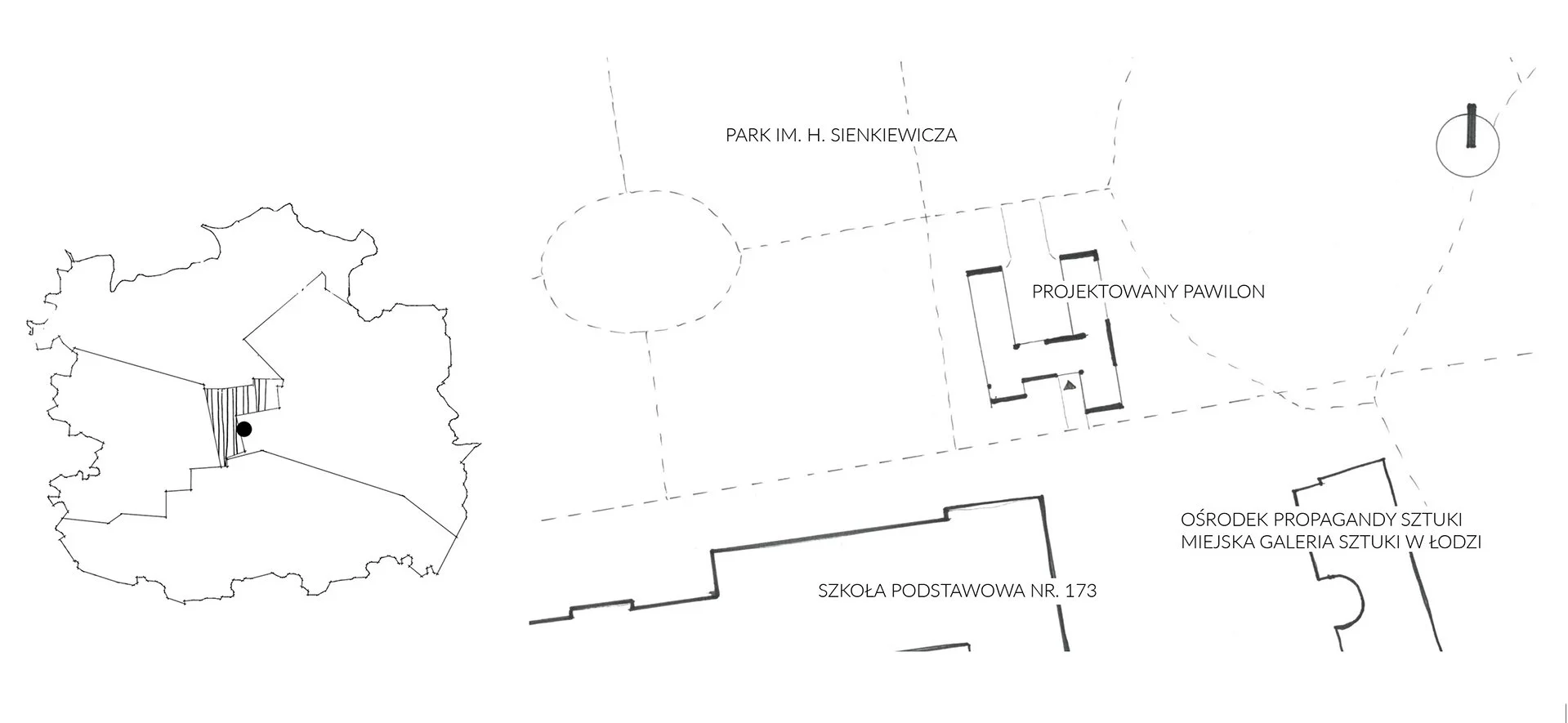
The subject of this study is a conceptual design for an exhibition pavilion dedicated to art. The chosen site is Henryk Sienkiewicz Park in Łódź, located within the boundaries of Kilińskiego, Sienkiewicza, Tuwima, and Nawrot Streets, in the very heart of the city. The park was established during the period of Łódź’s industrial expansion and is listed in the regional register of historic monuments (no. A/302, dated 6 December 1984). In recognition of the site’s historical value, the pavilion is conceived as a temporary structure. Due to its close proximity—approximately twenty meters—to the Łódź Municipal Art Gallery, the pavilion is intended to operate as an open-air extension of the institution. Its program is therefore deliberately reduced to a single function: exhibition. All auxiliary facilities are provided by the existing gallery building.
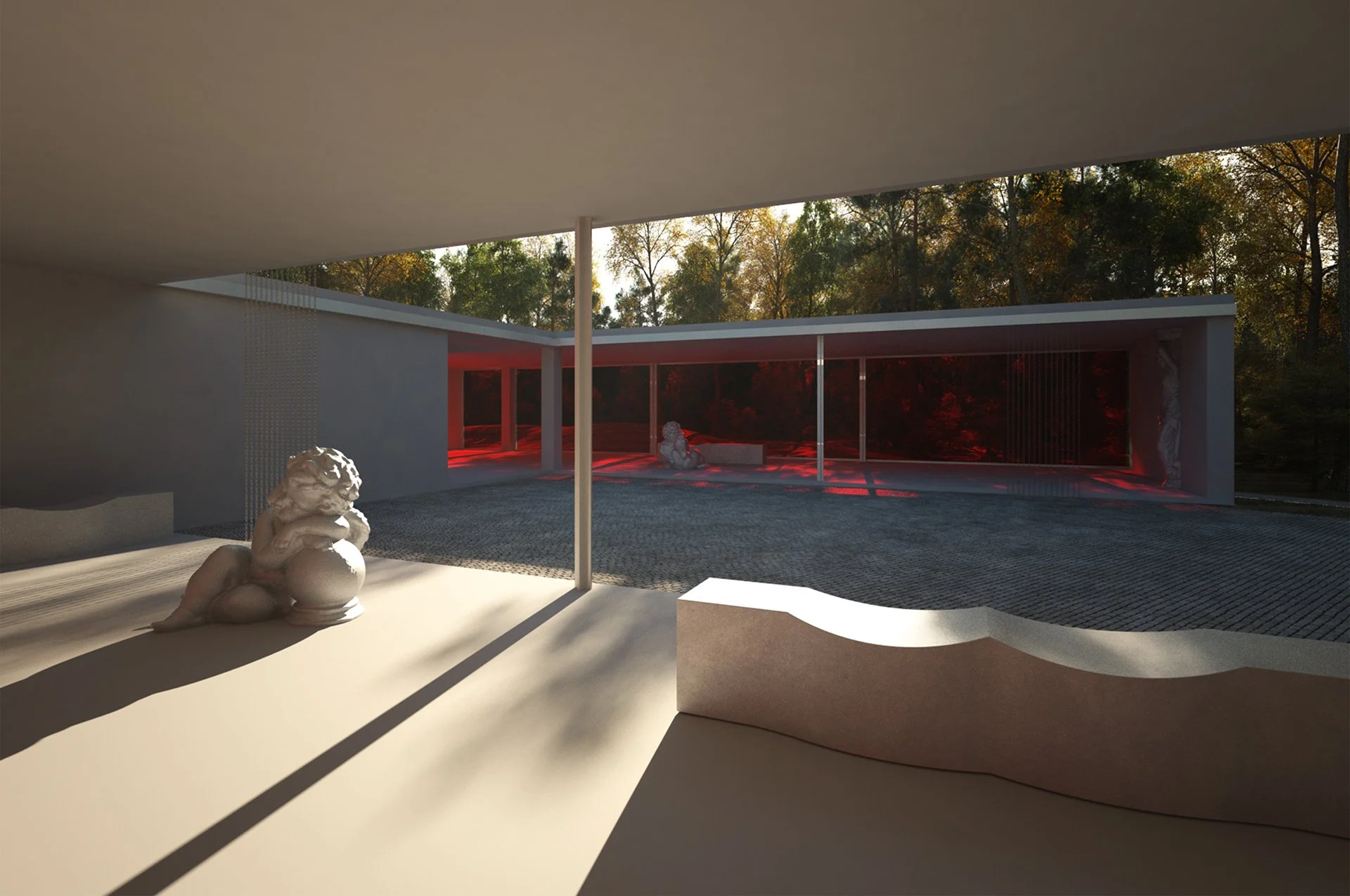
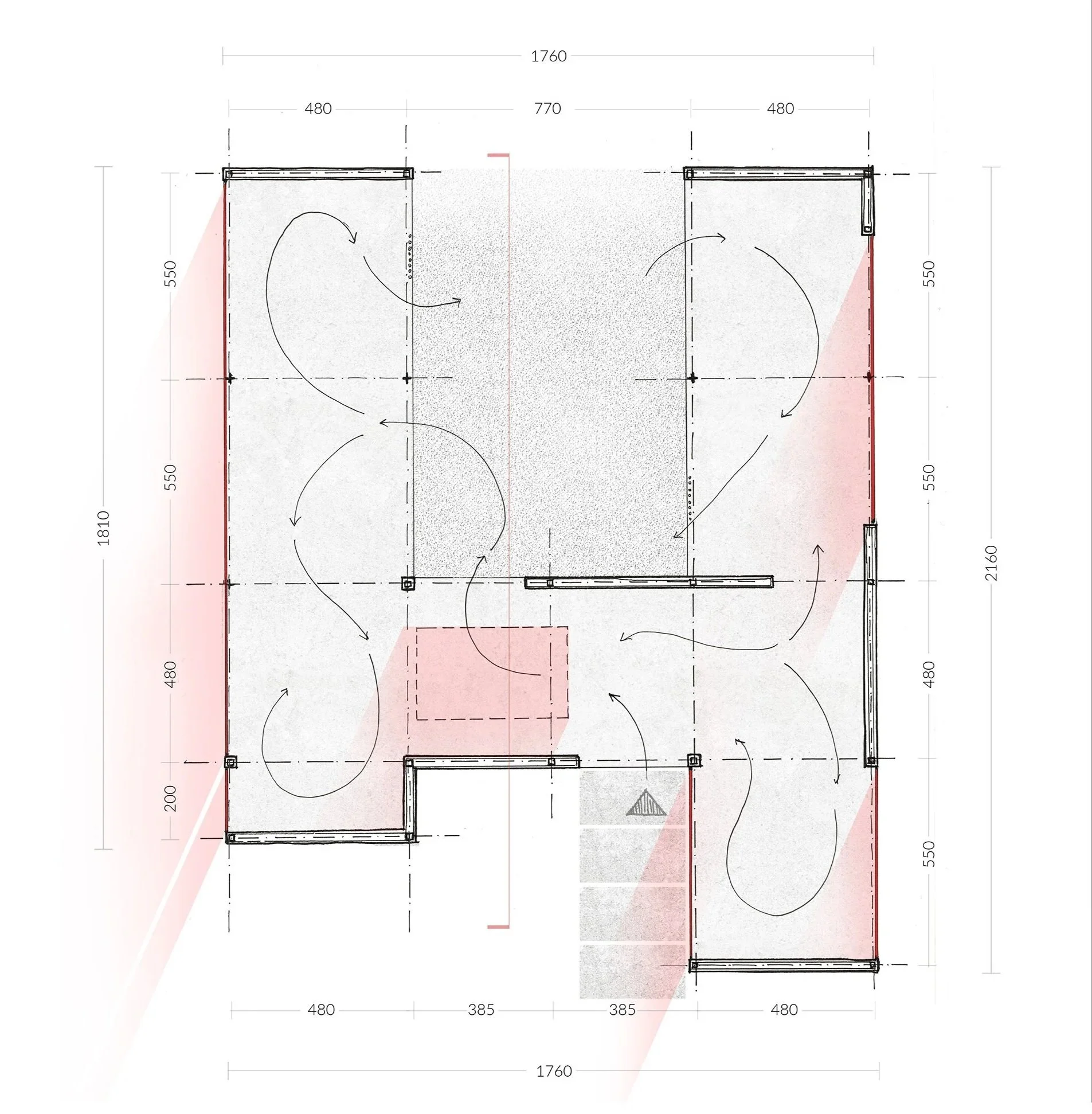
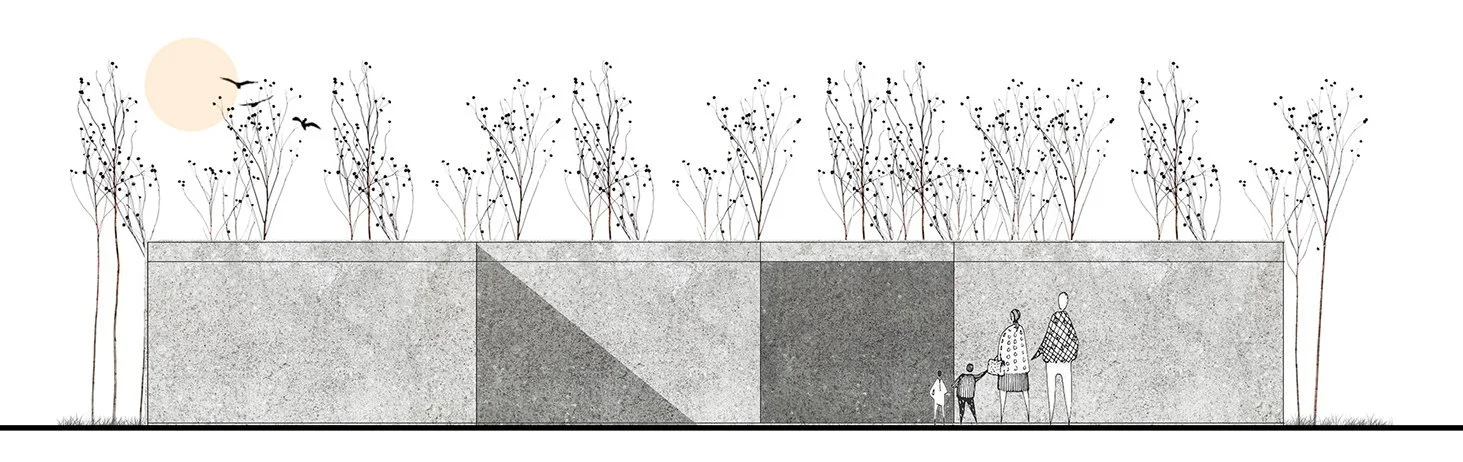
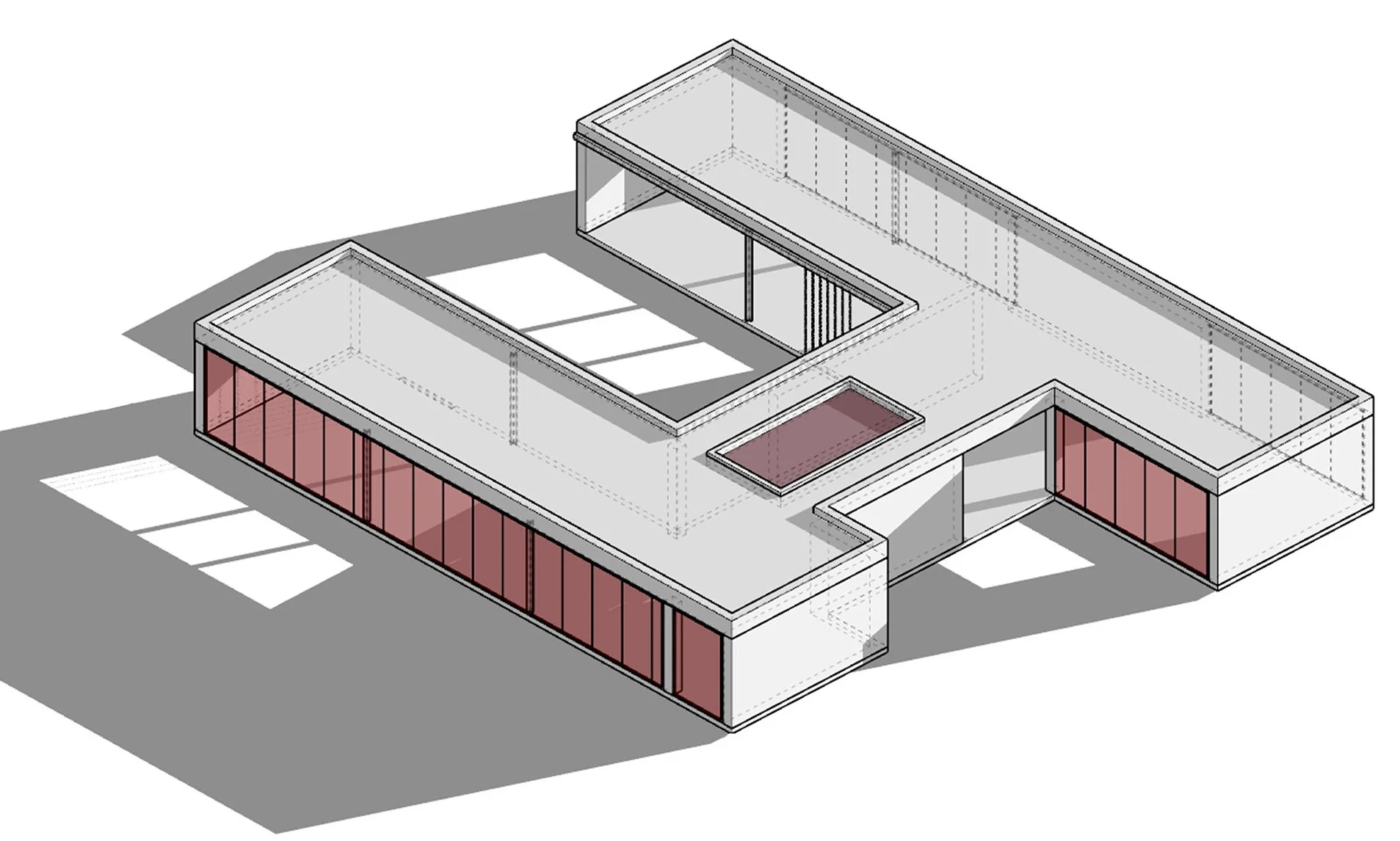
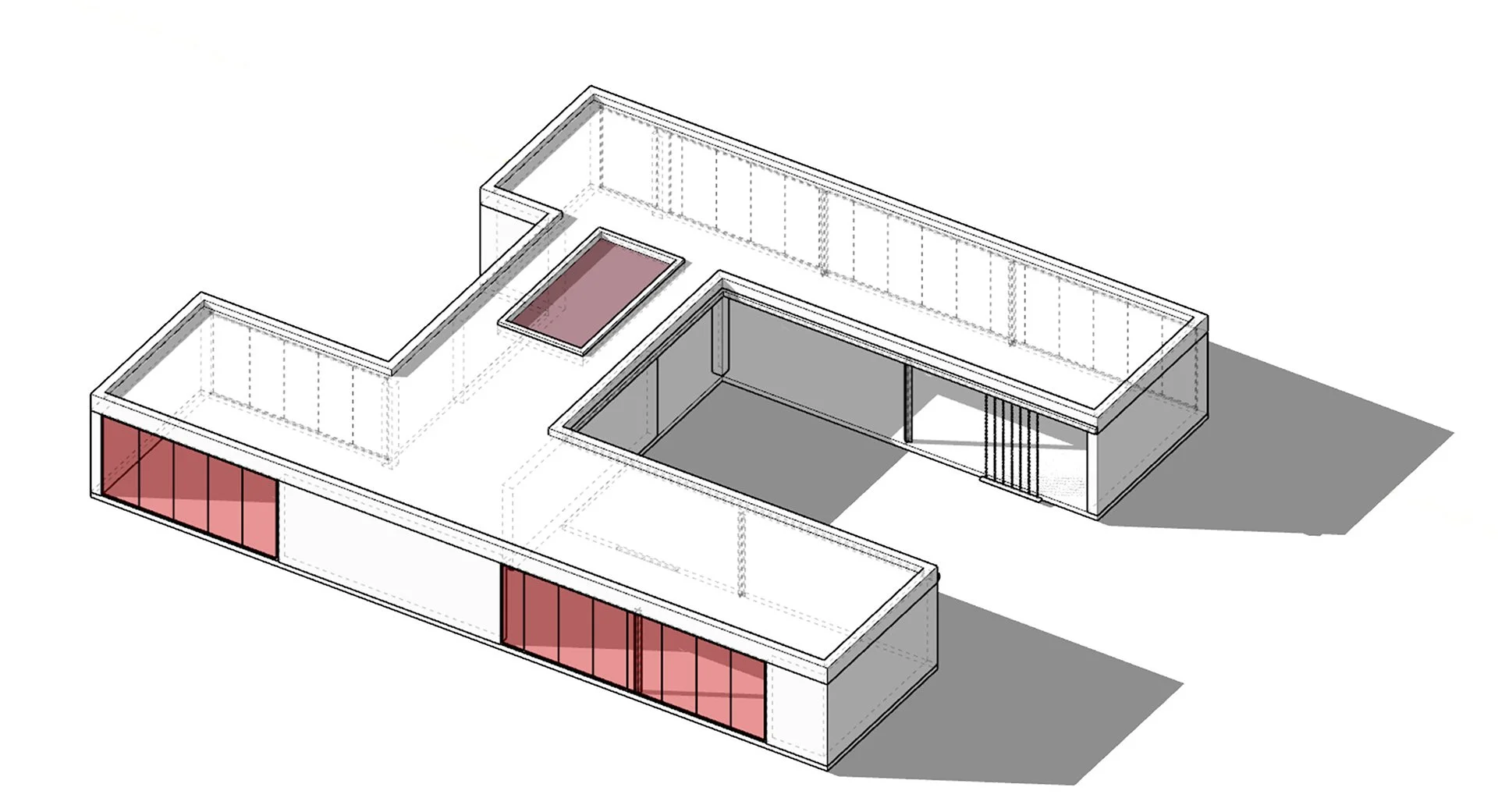
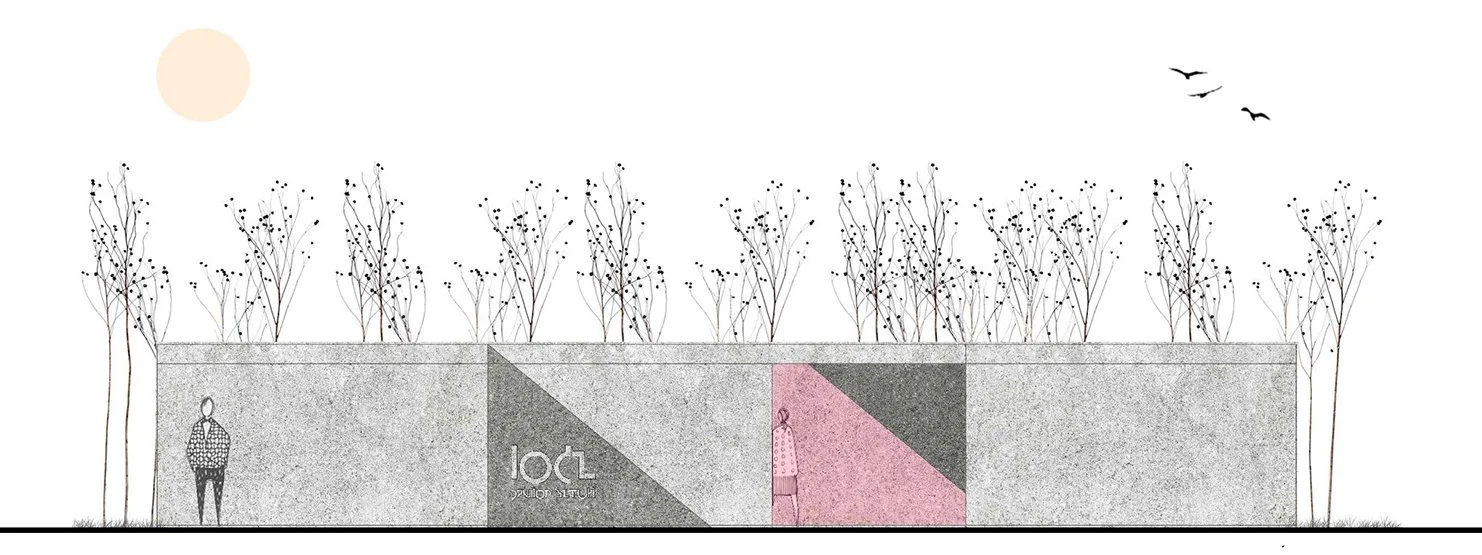
The pavilion’s form is introverted yet permeable—enclosed at its perimeter, opening inward toward a central courtyard. This spatial configuration allows for a gentle interweaving of interior and exterior, dissolving rigid boundaries between the two. The plan, based on the letter H, clarifies the entrance sequence, further emphasized by a smaller, enclosed courtyard formed between adjacent pavilion walls.
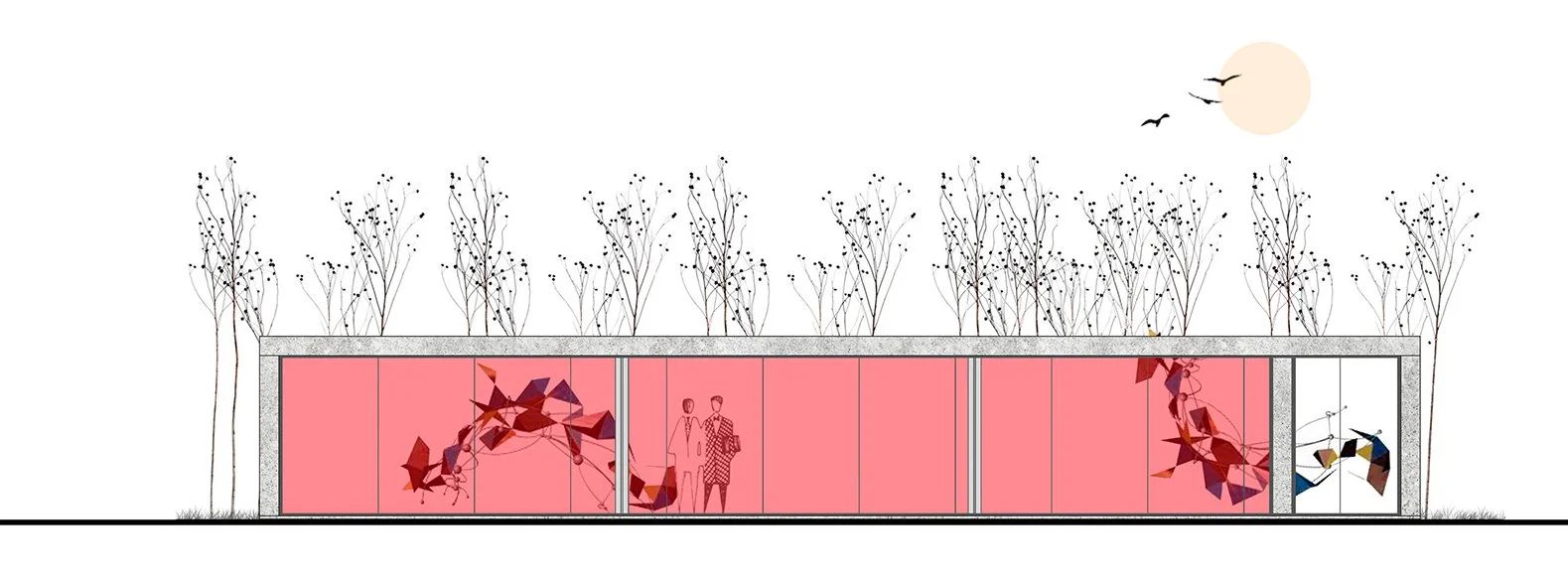
Research unequivocally indicates that red is the color that most strongly affects the human psyche.
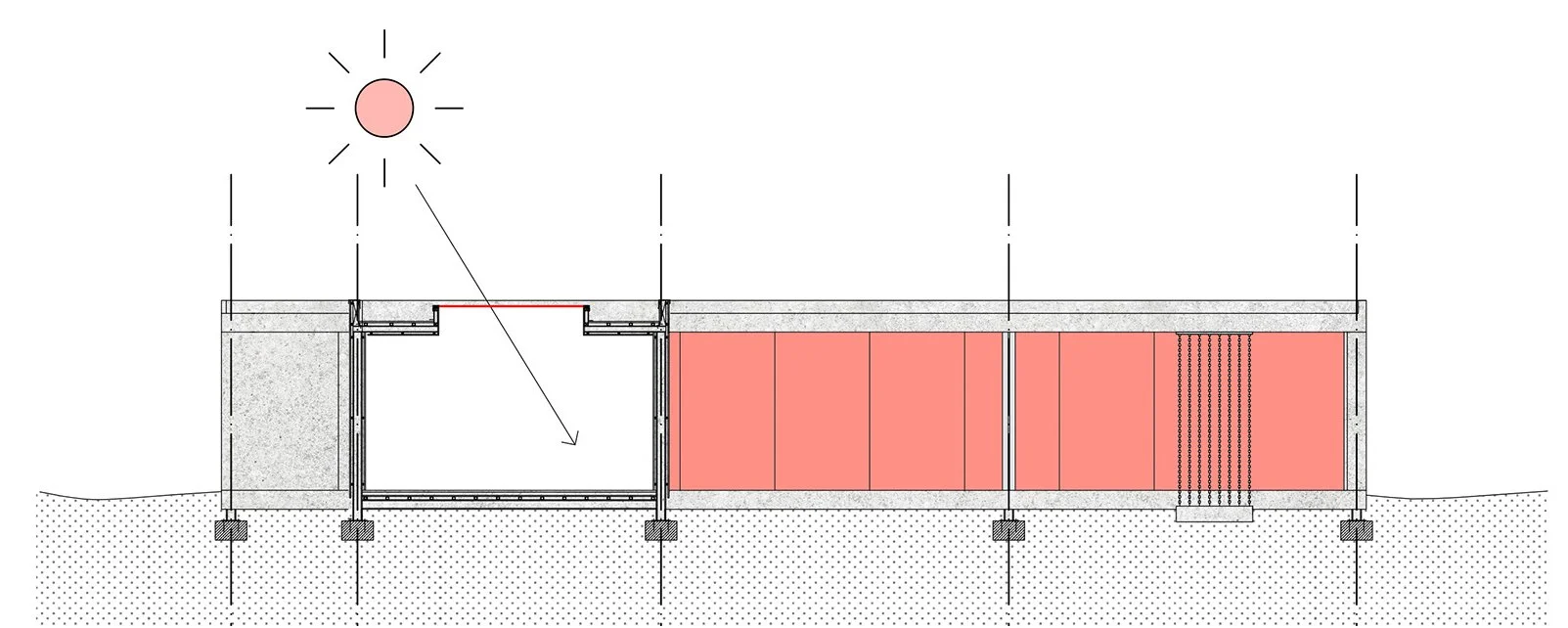
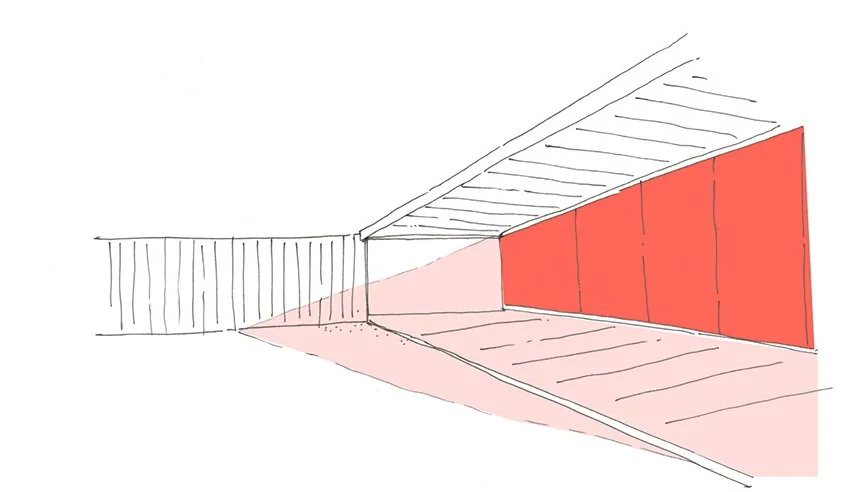
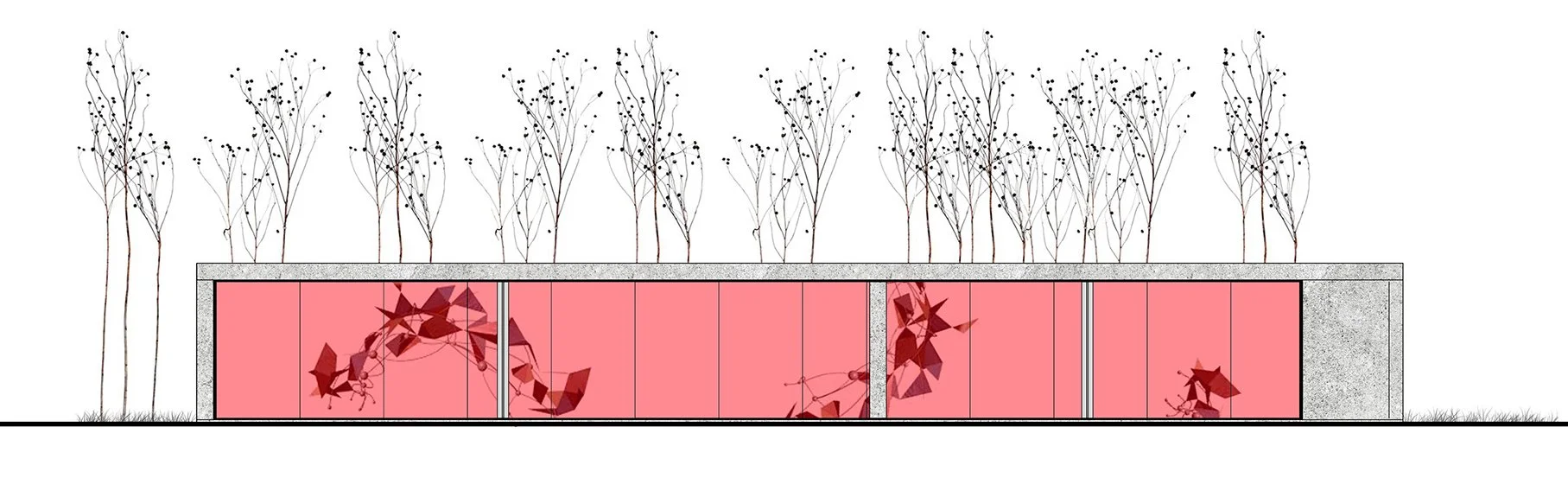
As the sun’s angle changes throughout the day, both the pavilion and the artworks it shelters acquire ever-new expressions—fleeting, unrepeatable moments visible only once, in that precise instant. The surrounding landscape—nature itself—when viewed through the chromatic filter of the pavilion’s skin, reveals an altered face, familiar yet newly discovered.
In the right light, at the right time, everything is extraordinary
Aaron Rose